I don't get invited to Malay weddings often, and when I do, I never miss them. In this case, I looked forward to this wedding because it was the wedding of the son of my classmate G (she is Aminah now, but we her classmates have the privilege of calling her fondly by her childhood name, G). A few of our schoolmates have kids who have gotten married but in our class of 22 girls, G's 22-year-old son is the first.
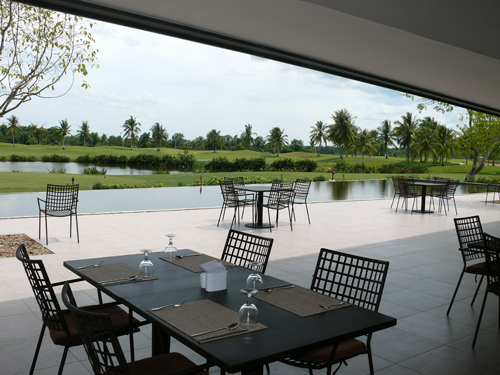
The wedding started with the akad nikah, the taking of vows in front of an iman, in G's new house in The Residence, an upscale estate that sits next to a golf course with the city of KK behind it separated by a small strip of sea. Access into the estate was by golf buggies because there were so many cars. I must tell G that next time she invites me, I want to be sent in by one of her two boats anchored behind the house.
The akad nikah was a very solemn ceremony that lasted nearly 2 hours. Because it was so solemn, I didn't take many photos but here are some taken after the ceremony:

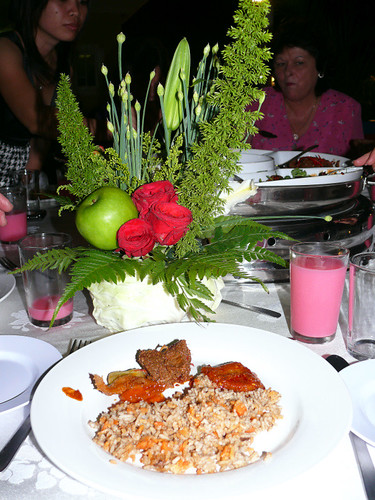
The Filipino florist/designer came up with interesting flower center pieces that included veg such as cabbage and chives.
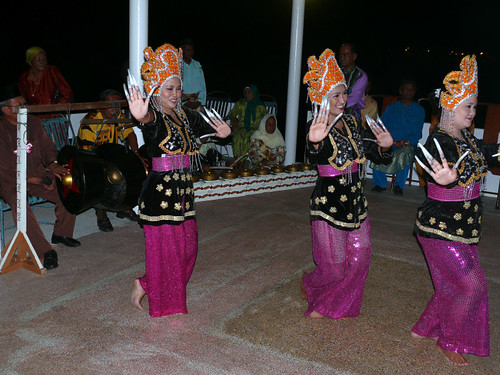
These are suluk-bajau dancers doing their traditional dances.
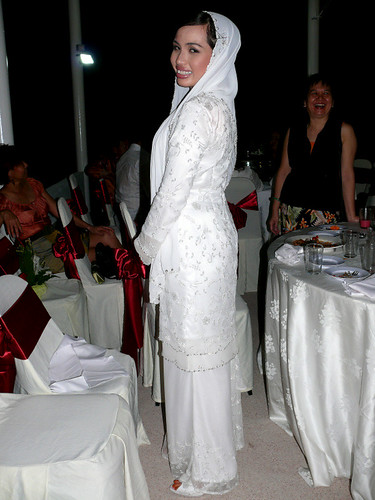
The lovely bride in a beautiful hand-sequined baju kurung.
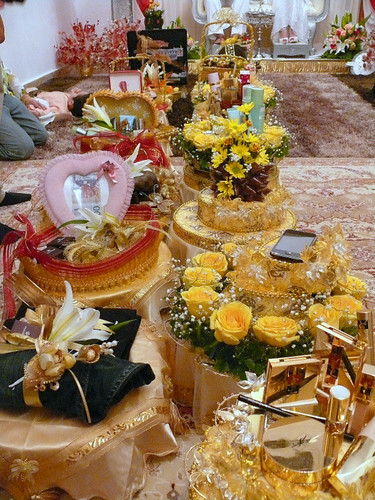
A row of interesting hantaran (dowry), beautifully wrapped and presented. There were many of sets of cosmetics, a couple of Louis Vuitton bags, jewellery, an iPhone, a pair of jeans and dodol (a chewy fudge-like confectionery made of coconut milk).

The beautiful young newly weds.
The next batch of photos were taken the next evening (9/6/09) at The Magellan Sutera Hotel where about 1000 guests attended the dinner. Again, I couldn't take the photos as freely as I wanted to because the occasion was very formal and grand. I wish I had the guts to walk up to the stage where the bride and groom were seated, dressed like prince and princess, as they were blessed by the VIPs and relatives. I was especially awed by the bride's breathtaking shimmering butter-colored baju kurung. A friend asked why I wasn't wearing a baju kurung and I realized I don't have one. Why I don't have one is because I think baju kurungs are hideous sacks used by some ladies to hide their rolls and lumps and bumps. I much prefer the sarung kebaya which seems to be worn proudly by the Indonesians but not anymore by Malaysians.
Everyday baju kurungs are like big cloth bags with holes to put your head through, and are usually made with cheap loud flowery fabrics. The baju kurung I dislike most are those that have reversed backgrounds, with, say red dots against a blue background for the top and blue dots with red background for the bottom. Oh. so. trite.
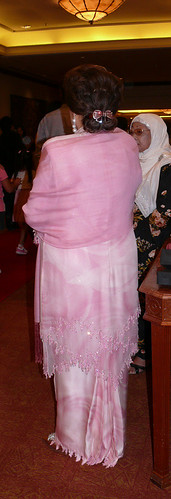
Well, my eyes were opened last night. Evening baju kurungs are totally different from ordinary day time sacks. Evening bajus are slightly more shaped at the waist, and are elegant, classy, exquisite dresses made from diaphanous, dreamy silk chiffon hand sewn with sequins and beads that shimmer and shine as the ladies glide elegantly across the room. I was particularly taken by this pink number with its scalloped multi-tiered layers edged in beads and sequins (if you could just have a closer look, you'd be awed too), especially when she was on the stage blessing the couple:
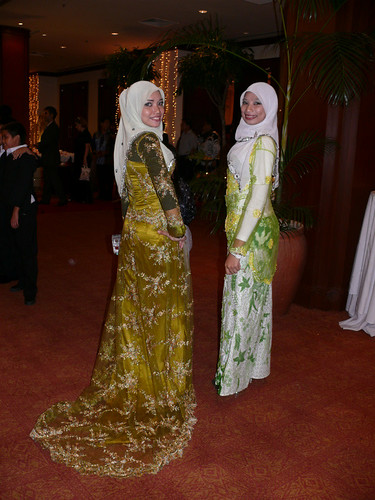
These two beauties obligingly posed for me in their beautiful bajus.
By the time I left the party, I knew I want a taupe beige-colored chiffony, flowy baju with delicate scalloped edges sewn with tons of sequins and beads.
Ok, on with the show:
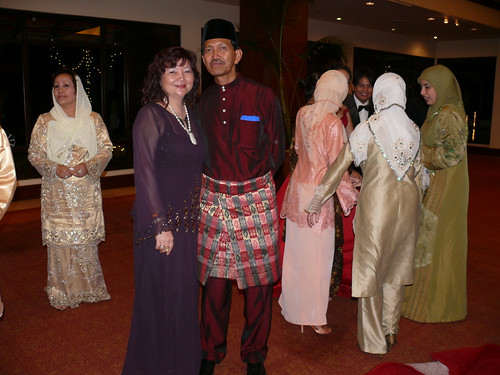
G and her prince who whisked her off at 20. G was a beauty queen and carries herself elegantly. I've never seen her without a smile, and as I thought about it last night, in all these years, I've never seen her angry or loud. Class lady, this one, and she remains the same as she was in school -- sweet, gentle and gracious.
G's baju was contemporary, very elegant and tasteful.
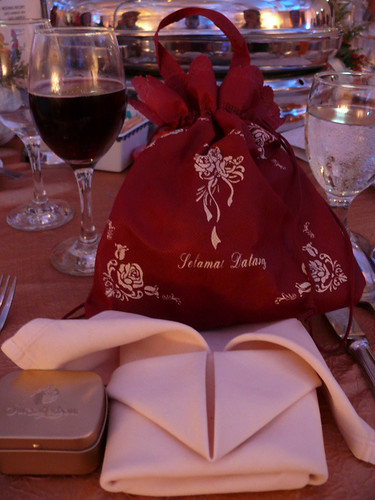
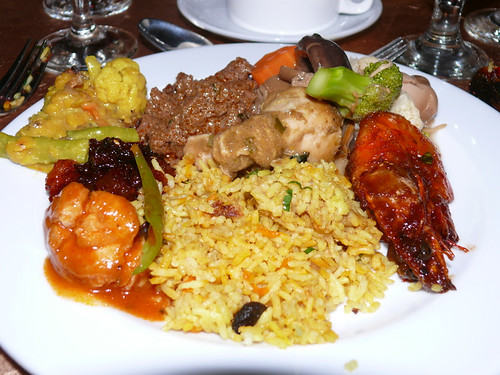
The food was absolutely delicious, from the soup soto kambing (lamb soup) to the nasi briyani (which had curry leaves), to the udang masak merah to the kurmah chicken. I had no idea Magellan serves such excellent Malay food. It def beats the food they serve at Chinese wedding banquets.

Dessert was a durian cheesecake, good with black coffee.

The cake was in the shape of fondant pillows...I wonder if there's a reason for this. Symbol of fertility perhaps? Somehow it reminds me of Arabian Nights, especially that blue pillow.
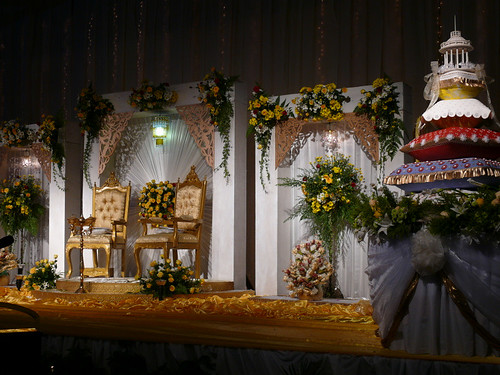
The stage where the couple sat to be blessed. You should've seen the bride's baju. It was stunning.

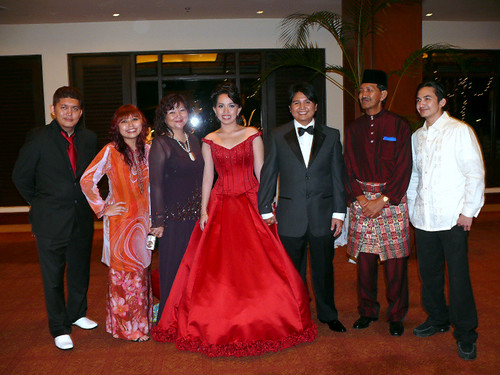
G and her family. I never understood pantuns/poems in school (although surprisingly now I do), couldn't speak Bahasa properly let alone write poems, but when G gave her speech at the end of the dinner, I teared as she told the newly weds to love each other forever unconditionally and recited a pantun that included these words, "kasih sayang bonda" --a mother's love. The tender feeling of gratefulness (that the kid has grown to what he is) and happiness (that he has found the person who loves him and will share his life) must've run through all the hearts of the mothers in the hall.
The wedding started with the akad nikah, the taking of vows in front of an iman, in G's new house in The Residence, an upscale estate that sits next to a golf course with the city of KK behind it separated by a small strip of sea. Access into the estate was by golf buggies because there were so many cars. I must tell G that next time she invites me, I want to be sent in by one of her two boats anchored behind the house.
The akad nikah was a very solemn ceremony that lasted nearly 2 hours. Because it was so solemn, I didn't take many photos but here are some taken after the ceremony:
The Filipino florist/designer came up with interesting flower center pieces that included veg such as cabbage and chives.
These are suluk-bajau dancers doing their traditional dances.
The lovely bride in a beautiful hand-sequined baju kurung.
A row of interesting hantaran (dowry), beautifully wrapped and presented. There were many of sets of cosmetics, a couple of Louis Vuitton bags, jewellery, an iPhone, a pair of jeans and dodol (a chewy fudge-like confectionery made of coconut milk).
The beautiful young newly weds.
The next batch of photos were taken the next evening (9/6/09) at The Magellan Sutera Hotel where about 1000 guests attended the dinner. Again, I couldn't take the photos as freely as I wanted to because the occasion was very formal and grand. I wish I had the guts to walk up to the stage where the bride and groom were seated, dressed like prince and princess, as they were blessed by the VIPs and relatives. I was especially awed by the bride's breathtaking shimmering butter-colored baju kurung. A friend asked why I wasn't wearing a baju kurung and I realized I don't have one. Why I don't have one is because I think baju kurungs are hideous sacks used by some ladies to hide their rolls and lumps and bumps. I much prefer the sarung kebaya which seems to be worn proudly by the Indonesians but not anymore by Malaysians.
Everyday baju kurungs are like big cloth bags with holes to put your head through, and are usually made with cheap loud flowery fabrics. The baju kurung I dislike most are those that have reversed backgrounds, with, say red dots against a blue background for the top and blue dots with red background for the bottom. Oh. so. trite.
Well, my eyes were opened last night. Evening baju kurungs are totally different from ordinary day time sacks. Evening bajus are slightly more shaped at the waist, and are elegant, classy, exquisite dresses made from diaphanous, dreamy silk chiffon hand sewn with sequins and beads that shimmer and shine as the ladies glide elegantly across the room. I was particularly taken by this pink number with its scalloped multi-tiered layers edged in beads and sequins (if you could just have a closer look, you'd be awed too), especially when she was on the stage blessing the couple:
These two beauties obligingly posed for me in their beautiful bajus.
By the time I left the party, I knew I want a taupe beige-colored chiffony, flowy baju with delicate scalloped edges sewn with tons of sequins and beads.
Ok, on with the show:
G and her prince who whisked her off at 20. G was a beauty queen and carries herself elegantly. I've never seen her without a smile, and as I thought about it last night, in all these years, I've never seen her angry or loud. Class lady, this one, and she remains the same as she was in school -- sweet, gentle and gracious.
G's baju was contemporary, very elegant and tasteful.
The food was absolutely delicious, from the soup soto kambing (lamb soup) to the nasi briyani (which had curry leaves), to the udang masak merah to the kurmah chicken. I had no idea Magellan serves such excellent Malay food. It def beats the food they serve at Chinese wedding banquets.
Dessert was a durian cheesecake, good with black coffee.
The cake was in the shape of fondant pillows...I wonder if there's a reason for this. Symbol of fertility perhaps? Somehow it reminds me of Arabian Nights, especially that blue pillow.
The stage where the couple sat to be blessed. You should've seen the bride's baju. It was stunning.
G and her family. I never understood pantuns/poems in school (although surprisingly now I do), couldn't speak Bahasa properly let alone write poems, but when G gave her speech at the end of the dinner, I teared as she told the newly weds to love each other forever unconditionally and recited a pantun that included these words, "kasih sayang bonda" --a mother's love. The tender feeling of gratefulness (that the kid has grown to what he is) and happiness (that he has found the person who loves him and will share his life) must've run through all the hearts of the mothers in the hall.