Showing posts with label Travel: Hong Kong 2008. Show all posts

Monday, October 6, 2008

Dinner At 6th Aunt's

Hub's 6th Aunt cooked us a 'yumtious' dinner the first day we arrived in HK. She is a fantastic cook, and in the words of her DIL, "Her food is as good as any HK restaurant's" and that is some compliment because the restaurant standards in HK are just so high.

P1250255

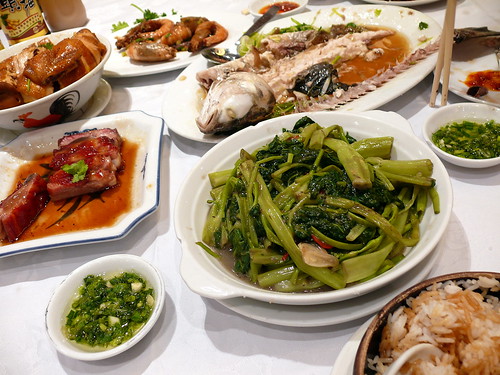
A well-planned Chinese home-cooked meal like the above will consist of meat dishes that include poultry, seafood and pork/beef, one or two veg and a good nutritious soup.

P1250243
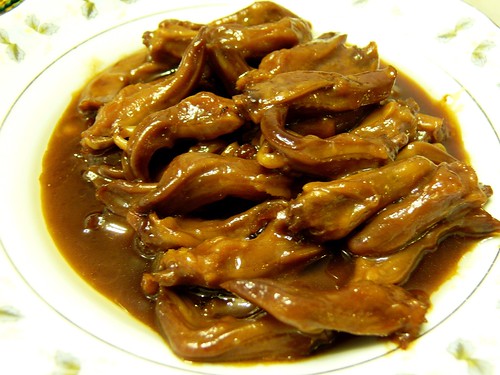
Braised ducks' tongues.

I can't quite understand the Shanghainese's love for duck tongues. Duck giblets, especially those from Nanjing, I love, but duck tongues? There's not much meat and they are not particularly flavorful except for the sauce they are cooked in. I think it is more for nibbling, for "chi xuang", eating fun.

P1250253
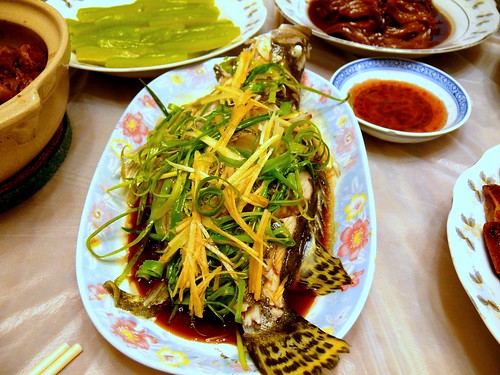
Steamed 'gweiyue'.

Gweiyue (sounds like 'expensive fish' in Mandarin & Cantonese) is a shang deng yue/superior fish and if your host serves it, it is an honor. I am beginning to love fresh water fish. Living in KK where there's abundant tropical fish such as grouper and mackeral, I have always preferred fish with thick chunky flesh. However, I realise now that tropical fish, though sweet, are rather bland in flavor while fresh-water fish, like the gweiyue, are fine-fleshed and more flavorful. These days they rear freshwater fish that don't taste of mud.

P1250242
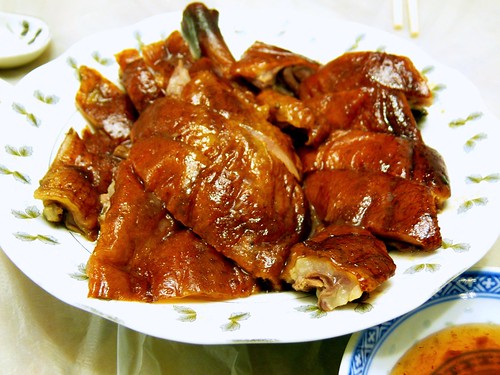
Roasted goose.

6th Uncle bought this from his favorite roasted meat shop in North Point. Yummy. I swear the next time I go to HK, I'm going to eat half a goose, no sharing business.

P1250241
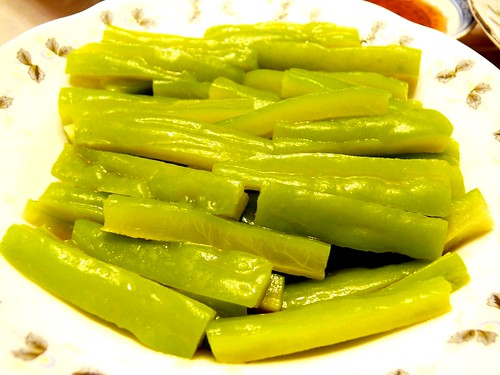
Liang bun koo gua (cold bittergourd).

I've never eaten bittergourd cooked this way; love it. I will share the recipe soon, but it's strictly for bittergourd lovers.

P1250248
Bai ye pork stew.

Bai ye is a Shanghainese bean curd 'skin'. Apart from adding it to stews, it is also used to make a yummy soup.

P1250245
Fried kai lan.

P1250244
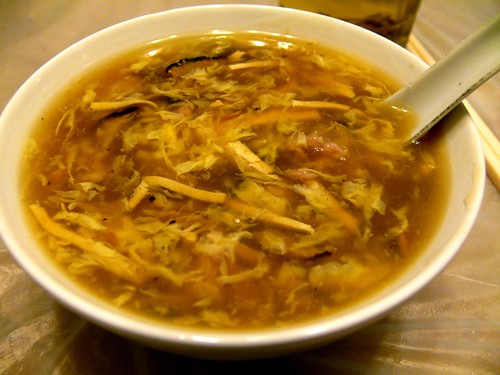
Hot and sour soup.

This hot and sour soup made with a superior dried scallops stock bought from the market was excellent. Notice how fine the mushrooms and tofu strips are. Even the egg 'flower' are very fine strands. I'll have to re-post my hot and sour soup photo; the ingredients for my hot and sour soup were cut as thick as french fries.

I totally agree with Fiona that her MIL's cooking skills can rival any HK chef. What I learnt from this meal is that I must put in more effort in my dao goong, knife skills. Chinese food is taste first, looks second, so presentation is usually kept simple. If the ingredients are cut well, most of the battle is already won as far as presentation is concerned.

Friday, October 3, 2008

5 Food You Must Eat In Hong Kong: No 1, Part 2

So right after the dim sum breakfast, we were on the bus to Kowloon's famous Nathan Rd to meet up with Hub's high-flying cousin J and his famous high profile wife S (high enough to carry the Olympic torch for HK) in Shamrock Seafood Restaurant.

If you are from Sabah, you'll know Shamrock Hotel, next to the restaurant, which every Sabahan loved to stay in in the 80s. Shamrock Seafood Restaurant is one of the most popular restaurants for locals. It is one of those traditional dim sum places I told you about, all noisy and busy and the dim sum, if it's good enough for locals, should be good enough for tourists.

Hub, Jungjung and I had just eaten a heavy breakfast. It is not polite to not eat if you are the guests, so we ate. And ate. We were amazing. Where did we find room to put all that food?

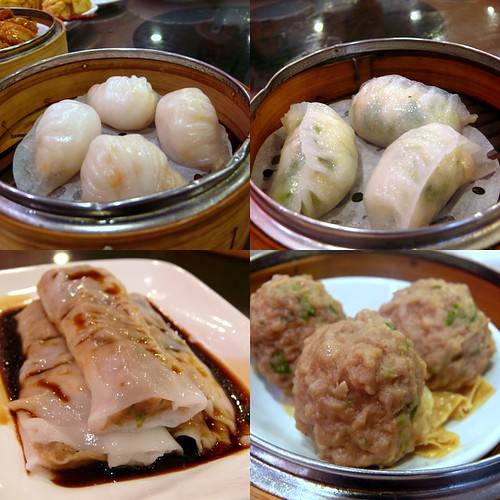
collage1
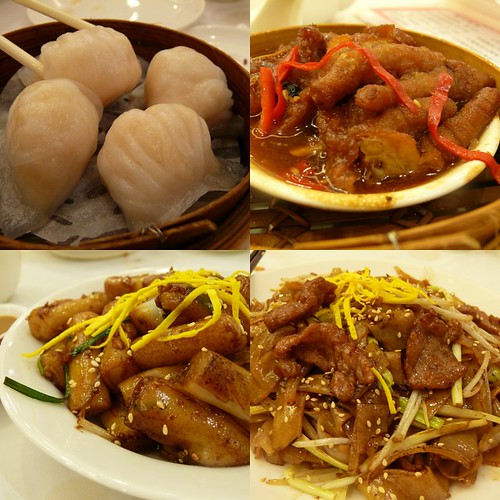
Clockwise: ha gow (prawn dumplings), choy gow (veg dumplings), ngoe yuk yuen (beef balls) and ngoe cheong fun (beef rice flour rolls). All were excellent, even in my bloated state.

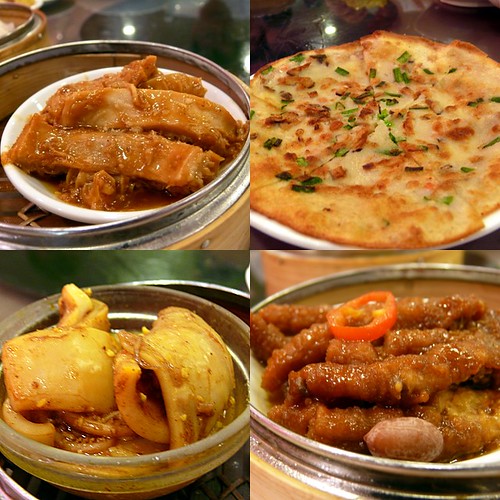
collage2
Clockwise: ngoe bak yip (stewed beef tripe), chung yau bang (spring onions pancake), fung jow or 'pheonix claws' (steamed chicken feet) & ka lei yau yee (curry cuttlefish).

The beef tripe was exceptional--tender and well-seasoned. Trust it to the Cantonese to make good use of every part of the animal.

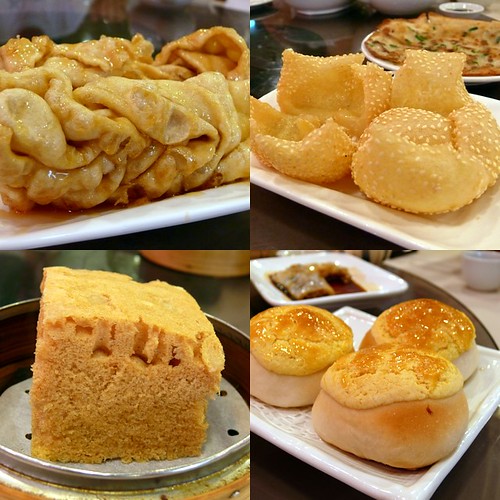
collage

I'm not sure about the names here but these are the sweet dim sum. To be honest, I had a tiny pinch of each but the others said these were very good, especially the jin dui (sesame seed puffs) and the polo buns. And when I was on the brink of a food-induced death, S ordered this, "One of Shamrock's best dishes, ngoe nam mien, jen hei jang ga."

P1250798
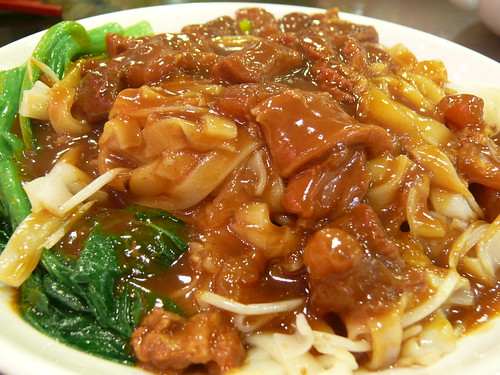
Ngoe nam meen (beef skirt flat rice noodles).

Looks deceptively ordinary but THIS WAS SERIOUSLY GOOD. Jen hei hoe jang (truly excellent). I could only eat half a rice bowl then. Seriously a case of "The spirit was willing but the body was not."

P1250801
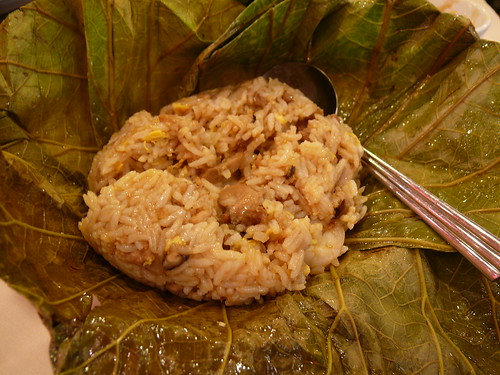
Glutinous rice in lotus leaf.

Only HK chefs can do this so well. Every grain of rice was flavorful with the ingredients (pork, egg, mushrooms, seasoning) AND the aroma of the fresh, not dried, lotus leaf.

Now, don't you agree that dim sum is the No 1 thing you must eat in HK?


Note: Shamrock Seafood Restaurant is at 223 Nathan Rd. in Tsim Sha Tsui, Kowloon, next to the Jordan MTR station. Open everyday of the week, dim sum from 7 am until mid-afternoon, a la carte dinner at night.

Wednesday, October 1, 2008

5 Food You Must Eat In Hong Kong: No 1

No. 5: Street Food
No. 4: Congee
No. 3: Noodles
No. 2: Roasted Meat
.
.
.
.
.
.
No. 1: DIM SUM!!

You must have guessed dim sum would be No 1 on my list. It would be a crime if you don't eat dim sum in HK! It's like not eating pho in Vietnam, baguette & pastries in Paris, curry in India, satay in Malaysia...

We had two consecutive dim sum meals on the Saturday that we were in HK. First it was dim sum breakfast in Tsuen Wan, the most western MTR stop on the Kowloon side of HK. Aunt Gouyee is a relative on Hub's father's side, and we hadn't seen her for years. Her son Jungjung is the most wonderful son, always taking his mom out for dim sum and visiting her once a week despite his busy life. They decided that the dim sum in Tsuen Wan's Water Place Plaza (I think that's what it's called; most of the signboard is covered in big chinese characters I couldn't read) is most convenient, plus the best, and so there we were at 9 am in a traditional dim sum restaurant. It turned out to be my favorite dim sum place of all.

To me, there are 3 types of dim sum places. First, there's the traditional dim sum restaurant where tables are covered with white linen, lights are bright flourescent tubes, waiters/waitresses can't speak anything else but Cantonese and the dim sum is darn good. These are big noisy casual restaurants located in shoplots within the city and suburban (if you can call any place suburban in HK) areas, where 3 generations come together on the weekends. The second type is the new dim sum restaurants. These restaurants are still decorated in traditional Chinese red and gold motifs and colors, but are classier. The menu is the same as traditional dim sum places, with some new fancy items, but prices are slightly steeper because they are usually in malls, not in shoplots. Superstar Seafood Restaurant would fall into this category. The third type, which is not as common, is the super classy super expensive super trendy (no red and gold dragons on walls) dim sum places where eating ha gow is like eating foie gras; you eat quietly and elegantly as the well-dressed waitress hovers over you. Zen in Pacific Plaza used to be like that but on this trip, I found that they have renovated and seem more friendly.
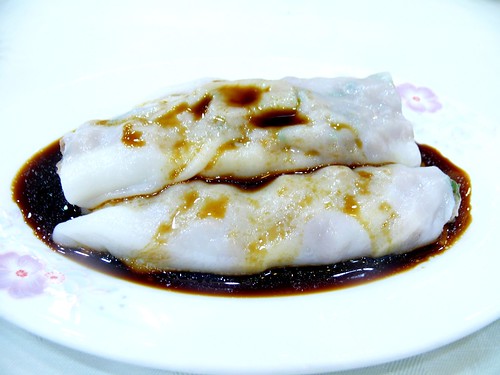
P1250733
Minced beef cheong fun (rice rolls).

Ah! This was the best cheong fun I've eaten so far (did I say that last year? Anyway that was last year). The cooked peanut oil (I couldn't understand why my Cantonese parents had to cook their oil when using it as dressing or sauce, but now I do--cooking it heightens the flavor) and the special soya sauce combine to give the most wonderful flavor while the rice flour pancake glides onto your tongue. Then as you chew, the beef gives a sweet aromatic taste that completes the whole experience of eating Can't Get Any Better Cheong Fun. *sigh* p.s. I've noticed that HKgers don't order shrimp or cha siu cheong fun. It's always beef cheong fun.
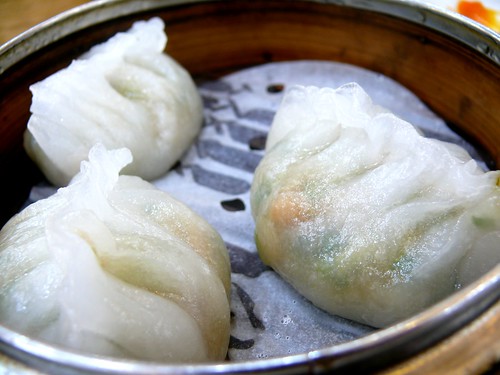
P1250752
Chives and meat gow.

Perfect dumplings of wheat gluten and tapioca flour with a delicious filling of mixed veg and meat. Dim sum is not only about taste, but presentation. Look at the skill in shaping and making a translucent 'skin' or wrapper that allows you a look at what's inside, a skin that's not too thin or thick, not too chewy or soft, and not sticky to your teeth. Dim sum after all means 'point at the heart'. Doesn't that tell you how elegant, poetic and romantic this food is?
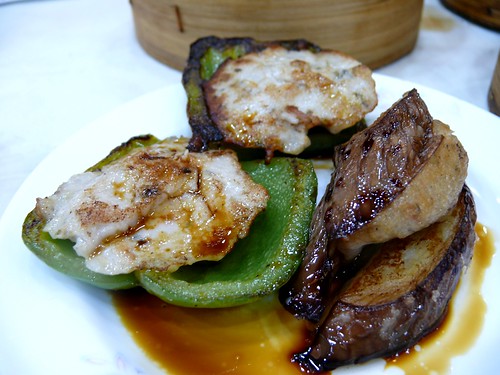
P1250756
Stuffed brinjals and bell peppers.

I wouldn't have ordered this because it looked so ordinary. But one bite and my eyes widened. I sat up. I controlled my chopsticks from grabbing all the items on the plate. The fish paste was tender-springy and the soy sauce super fragrant--tell me how you make soy sauce so aromatic, I wanted to scream. This is the best stuffed veg I've ever eaten. Only 3 items and 2 of them scored 100 points each. I was wide awake and very happy I gave up my sleep for breakfast, which I don't normally eat.

P1250761
Hum sui gok, salt-water/salty puffs.

Ah...I can eat two plates of these. Crispy-light outside, soft-chewy inside with a delicious meat filling. Again, I have to shout from the mountains: A million thanks to whoever came up with dim sum!!

P1250744
Fried radish cake.

You get the flow; everything was super duper.
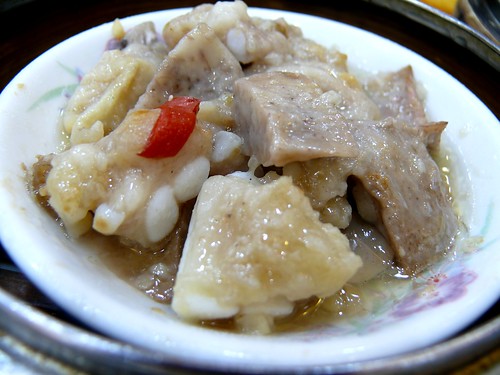
P1250742
Steamed pork ribs with taro.

For a change, we tried this instead of the usual pork ribs with black soy beans. I loved it; pork and taro are made for each other.
P1250746
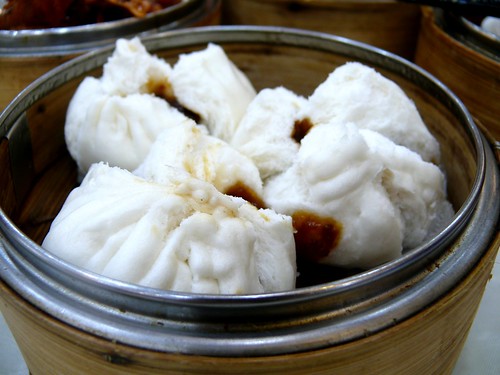
Cha siu bao, roasted pork buns.

I've always liked HK 'smiling baos', those buns with their tops cracked open like they are laughing. The texture of HK baos are between soft bread and cake, very fluffy and tasty. Unlike Malaysian cha siu baos, the roasted pork filling is not made of cheap pork fat and onions in a thick, red-colored sweet sauce but yummy cha siu that you eat without feeling poisoned.
P1250753
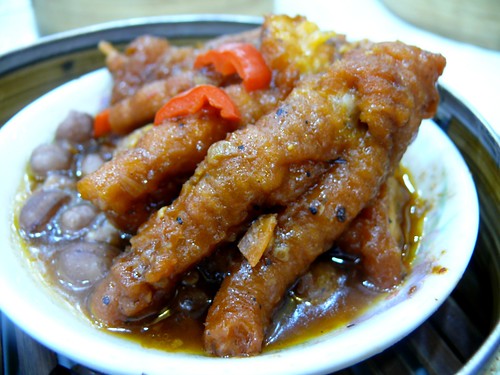
Chicken feet, deep fried and steamed.

Chinese eat certain food not just for taste but sometimes for texture. These are fun to eat, really, and after a few feet/claws, you will master working the skin and tendons off the bones inside your mouth and spitting out the bones.

P1250737
Ma lai go.

This was the only item I rated 8/10 instead of 10/10 because I was partial to Tai Wing Wah's ma lai go, which I was to eat that night.

By the time we finished, it was about 11 am. We were to meet Hub's cousin James and family in Tsim Sha Tsui for lunch. Dim sum lunch. I was groaning. I couldn't possibly eat a sesame seed by then. That's how I felt. But if you are invited to eat the No 1 food in HK, you must go, even if you had to eat the same thing again half an hour later. So at 11:30 am, there we were, sitting down for another dim sum feast. Bear with me, that'll be my next post. If I can eat the same thing twice in a row, you can read back-to-back dim sum posts too.

Tuesday, September 30, 2008

5 Food You Must Eat In Hong Kong: No 2

No. 2: Roasted Meat, Cantonese Style

P1250975

P1250971

P1260014

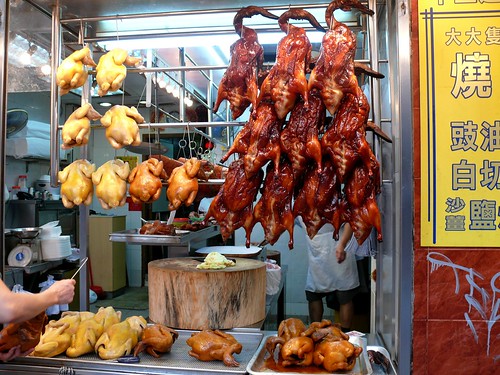
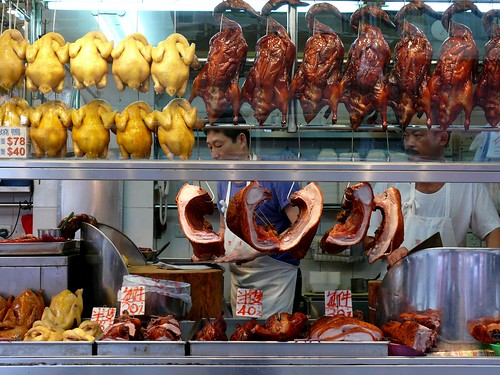
You must've seen those golden brown ducks, chickens and pork hanging in the front windows of Chinese restaurants, calling you in for a bite. Whenever I go to any western city, the sight of roasted meat hanging in restaurants window gives me comfort. It's just so home. I suppose it's like the Americans seeing The Golden Arches in the middle of Mongolia.

In HK, roasted geese and suckling pigs are top items in roasted meat restaurants. And no wonder, because these are absolutely totally delectable. I'm not so partial to suckling pig--images of squealing piglets torn from their frantic mother prevents me--but I love roasted goose. I used to think that maybe I love roasted goose more than roasted duck because I can't find goose here, where I live, but after my recent trip to HK, I realise it's because goose just tastes superior to duck. This fact became obvious to me when I attended a full-month banquet dinner two weeks ago where everybody at my table had second, third helpings of roasted duck whereas I struggled to eat the tough, dry, tasteless piece of duck someone had eagerly served me. While my Hub said he couldn't tell between duck and goose (which disappointed me. He said he can't tell between turkey and chicken too), I can. Goose is clearly the better 'quack', its meat being more tender, moist and flavorful in a much more pleasant way than duck. Agree?

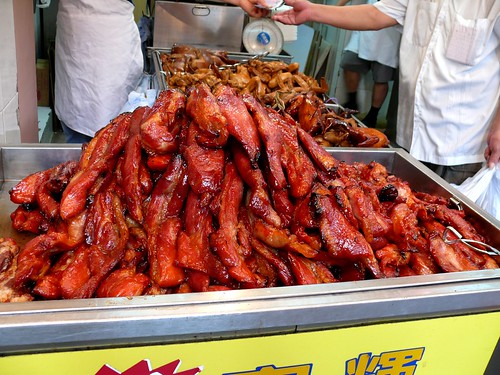
It seems like each time I go to HK, I give cha siu (pork shoulder marinaded in soy sauce and sugar and roasted) a miss because the roasted pork we get in KK is quite good and I don't want to waste my stomach space on something I can get at home. Another reason is I avoid food with artificial coloring, and cha siu normally comes stained in red. I do bother to eat HK's crispy roasted pork belly, because HK crispy pork belly is excellent.

A post about roasted meat is not complete without a mention of the most famous roasted meat restaurant in HK, Yung Kee Restaurant (see Droolteam's review). I may have eaten Yung Kee's roasted goose before, years ago, I can't quite remember. Nearly everybody I've asked tells me that sure, Yung Kee's roasted meat is good, but they also tell me Yung Kee is not better than the other good but lesser known roasted meat restaurants. A taxi driver summed it up this way: if there are enough of you to fill a table, and you don't mind paying the price (RM300+/US$90+ per goose. Or is it half a goose?), go ahead and try Yung Kee just once. But if there's just two of you and you can't eat a whole goose, Yung Kee will give you cut portions and that's a no-no; he said HKgers won't eat cut portions, which he had a term for. So, given that advice, there's no point paying for something you can find in other shops for much less. Yung Kee seems like one of those over-rated restaurants for tourists.(Note: HKgers unanimously told me that the best roasted goose is in Sham Tseng "Deep Well" out in the New Territories. For the best roasted pigeons, head out to Shatin.)

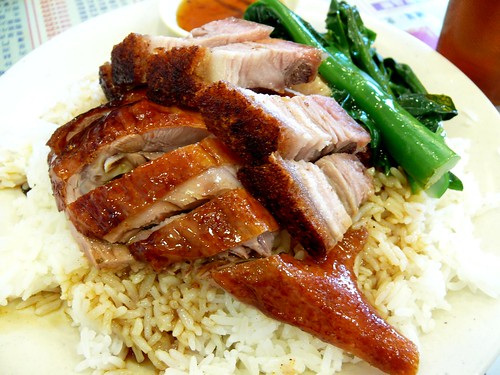
Roasted meat lunches are the Chinese equivalent of fast food in the sense that the meat is already cooked and they only have to chop it and bring it to your table, which in HK is almost as soon as you've given your orders. For an economical lunch, order your roasted meat combination on rice rather than have rice and meat served separately; it's much cheaper this way.

P1250449

Now that I've told you, don't forget to eat roasted meat the next time you are in HK. It's No. 2 on my list, that's how great it is. Don't think that since you get roasted meat where you live you don't need to try it. Somehow those HK chefs just do it perfect. I have a feeling that the secret is not just in the recipe, but also in the way the animals are reared (we know that for example, pork in most western countries is only good if it is from Asian grocers; something to do with the feed and sex -male or female-of the pig?), that makes HK's roasted meat the best in the world.


Thursday, September 25, 2008

Hong Kong Day 5 Dinner Part 2

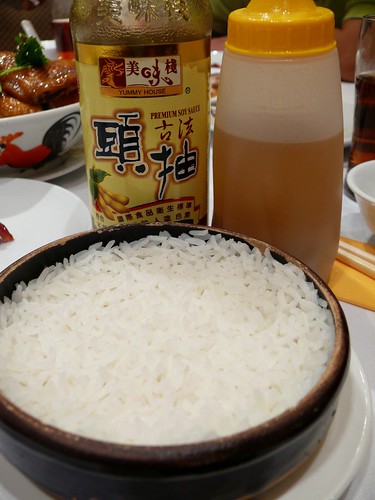
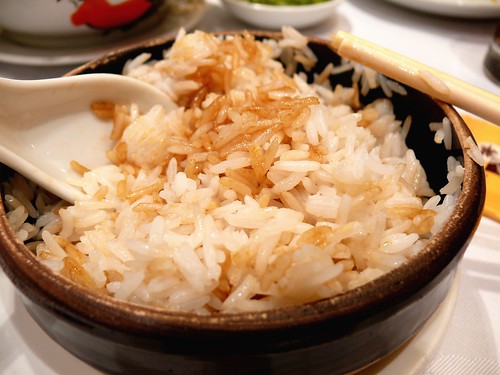
This is TWW's famous pork oil rice. It comes steaming hot in a medium-sized claypot. The rice is top grade white rice, fluffy individual grains that aren't too soft or too hard. Served with the rice are superior soya sauce and pork oil.

P1250886
Perfect rice.

P1250889
Drizzle the pork oil. The more the better.

P1250891
Then the soya sauce.

P1250894
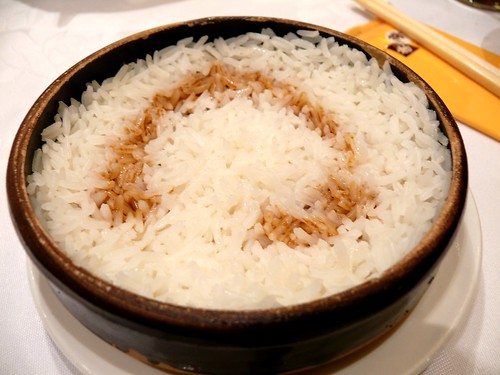
Mix the rice thoroughly.

P1250904
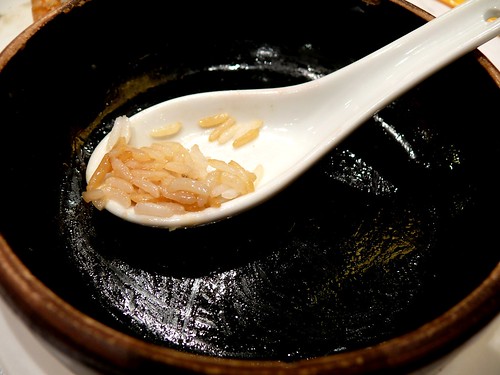
I ate every single grain, like my ma always told me to.

What's my verdict? How can anything so simple taste so good?! I tasted the rice individually, then the soya sauce and the oil before mixing them. The rice of course was beautiful top grade rice. The soya sauce was slightly umami/xien/savory sweet, making me wonder if there was msg in it. But it was the oil that stumped me. Why was the pork oil so light? When we make pork oil out of pork fat at home, the oil usually comes out dark golden in color with a distinct pork oil flavor. TWW's pork oil was very light (must've used very small heat to slowly coax the oil out) in texture and color, and the pork oil smell was not there. Yet that bowl of rice tasted beyond my high expectations. I think the secret lies in cooking the rice to perfection, and because when food is so simple, it must also depend on quality ingredients. Highly recommended. Hub and I cleaned a bowl out each.

Anyone of you ever eaten rice done this way before? A and Hub both remembered childhood days in Shanghai when this was the way rice was commonly eaten. This was the first time I've eaten pork oil rice. My kids eat a similar version (taught by their father): butter and Bovril mixed into piping hot rice. It is yum too, but the flavor of the Bovril and butter is heavier than pork oil rice. Ming came up with a version of Bovril and butter with spaghetti and it is damn good.

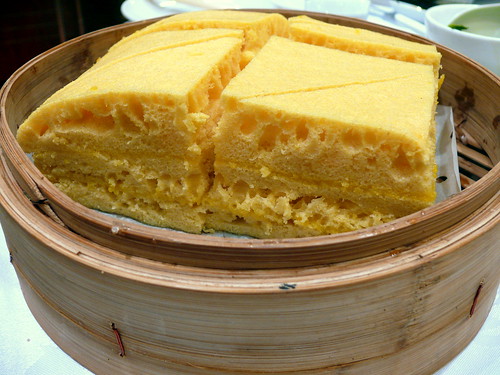
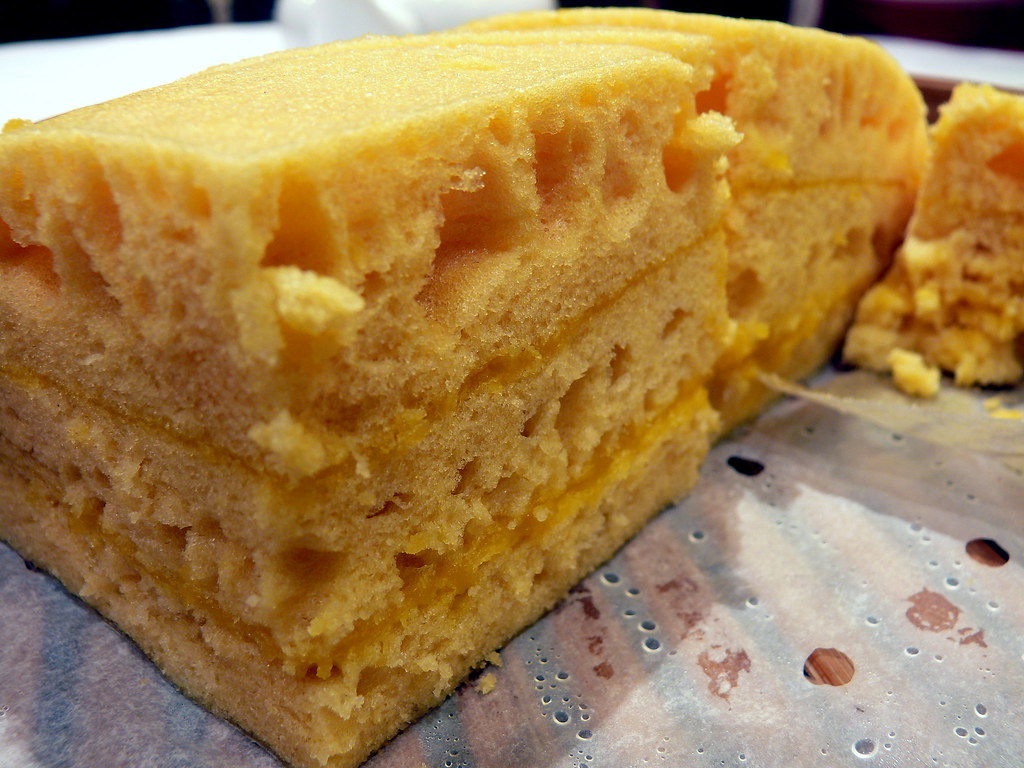
TWW's most famous dessert is ma lai go (Malay cake), which, like I said in my post on TWW last year, is not a Malaysian creation. I'm guessing that it was a HK chef who came up with this and gave it the exotic name. Most ma lai go are golden-brown in color, an allusion to the brown-skinned Malays, but TWW has kept its ma lai go a yellow color. Ma lai go should not be confused with chinese sponge cake because the former has lard while the latter is devoid of fat. There is another cake, usually served in dim sum places, called the chin chen go (1000-layer cake) and it has several, not thousands, of layers. I was surprised to see that TWW's ma lai go had several layers-- ma lai go is usually one solid block with no custard in between.

P1250923

P1250934
Tww's ma lai go is softer than cotton puff, lightly fragrant with lard, eggs and some flavor I can't quite tell. Ma lai go is probably the only cake which you eat with chopsticks if you want to practise HK dining etiquette.

So that's TWW and its fantastic food. If you go there and your stomach allows it, try their house noodles too. It is super fine and crunchy. A bought me two boxes. Am keeping them for special occasions.
Tuesday, September 23, 2008

Hong Kong Day 5 Dinner

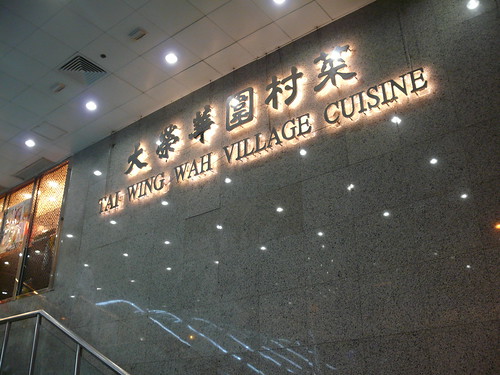
My recommendation of a restaurant for dinner in HK last year and this year is still Tai Wing Wah Village Cuisine. There are two Tai Wing Wah (TWW) restaurants, one in Yuen Long (the original one) and another in Kowloon Bay.

P1250937

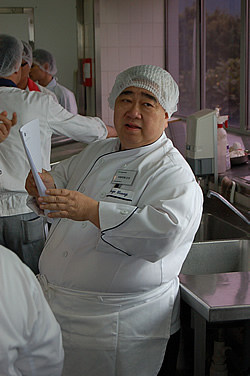
HK is well-known for food, shopping and wealth. Nobody disputes that. So who is the most famous food critic and celebrity chef in HK/Asia, the Asian version of Anthony Bourdain and Jamie Oliver? I think most people will give that honor to that white-haired gourmet called Hugo Leung Man-to, or Toto for short. This guy is everywhere on the TV screens when it comes to Chinese food programs. Toto personifies his career--he looks like a big barrel, and a friend who has seen him in person said that if Toto ever fell down, he'd not be able to get up on his own. I was told Toto used to work in Wing Wah (a long established HK restaurant that to this day churns out mooncakes and Chinese sausages-which I don't find any good-and other food products) as a chef and then he quit and opened the TWW in Yuen Long. It was a hit, and the second TWW soon followed. I'm told that when he's in town, he'd be at the Yuen Long branch. You've been told.

toto leung
HK's top food critic celebrity, Toto

TWW is so popular that you need at least 7 days' prior booking to get a table. I arrived HK Tuesday and called them Wednesday morning to get a table but the lady said they could only fit me in the following Monday. I told her I was from Malaysia, that I dined there last year, and that I was leaving Sunday and all the while I could imagine her thinking "So what"; it was pathetic of me. Of course she still said no, and informed me that the only table available was for lunch on Sat. Aw. We already had a lunch date with relatives Sat.

So at dinner with A (who, together with my ex-roomie from college, H, was the one who brought me to TWW last year) at Ye Shanghai on Friday, I told her my sad story and she said "You want to eat at Tai Wing Wah hei ma? Hoe, ting man, ting man la." Like a kid who got her toy, I went, "Really? You really can get a table?? Tomorrow? A Saturday?!" I would've kissed her feet if she wanted me to.

I told you my friends A & H have a way around HK. Imagine, no tables until Monday yet within 24 hours we were seated at Tai Wing Wah, with about 70 people waiting outside! People kept coming, even at 9 pm. I hope me telling you this doesn't get my friends in trouble. But they are regulars, so I guess they are privileged.
taiwingwah
Left: half of the crowd that was waiting outside the restaurant, the other half on the left of the pic. Right: inside the restaurant, which is thrice as big.

The restaurant in Kowloon Bay is a little out of the way, and I don't know if the subway stop is nearby. But whatever the inconvenience, it is worth all the trouble. First of all, TWW serves Cantonese food at its best, unpretentiously simple and delicious. Secondly, the price is crazy cheap. Every item on the menu is HK$52/RM24/US$7 (up from HK$48 last year), from the chicken to the fish to the veg to the tofu to the noodles to the steamed cake. We can't eat at that price in Malaysia, let alone HK, one of the most expensive places in the world!

Although there were only 3 of us (H, remember, was in Vancouver) , A ordered enough for 5. To our credit, we finished everything except the chicken and the ma lai go, which I hand carried back to Malaysia.

P1250874
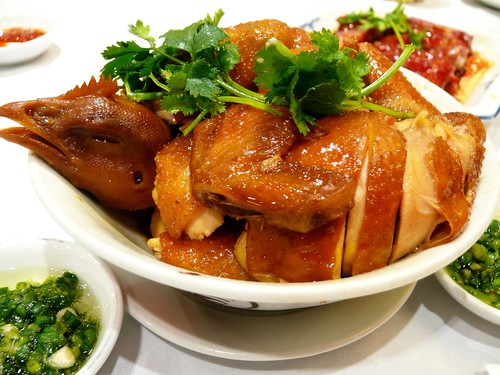
Soya sauce chicken, yummyyy!

TWW's soya chicken is always served in a bowl, and it is one of the top items so nearly every table will have this dish. However, I think the chicken last year was more fragrant.The thing about HK's chickens (and China's too) is that they taste home-reared, with flavorful meat and thin juicy skin that I love to eat. In Malaysia, home-reared chickens have thick fatty rubbery skin which I avoid most of the time. Sometimes I do smuggle a slice into my mouth. Sometimes.

P1250872
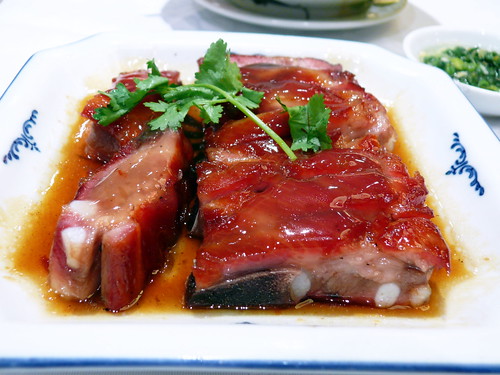
Roasted baby pork rib, A's favorite but I find it kinda common although it was tender and tasty.

P1250903
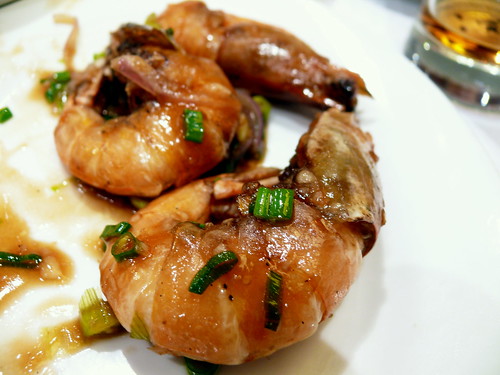
King prawns in special sauce.

If you look at the same dish I had last year, you'll see that the prawns were smaller and there was a whole plate of it but this year there were only 5 or 6 big(ger) prawns.

P1250878
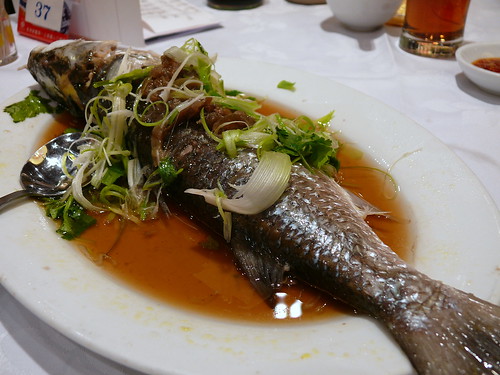
Woo toe steamed with pickled lime.

Pronounced differently ("woo" on the 3rd note in the 4 chinese ways of pronouncing a single character/syllable), woo toe means taro but this woo toe ("woo" on the 1st note) is a kind of fish. The fish was absolutely fresh, sweet and had a nice taste and flavor. The sauce was slightly tangy; the pickled limes are the same types that are pickled in brine for years and made into drinks to soothe dry throats. My Hub said if he comes to TWW again, he'll order two of this. The way he said it, he intends to have the two orders to himself, that's how much he liked this dish.

P1250902
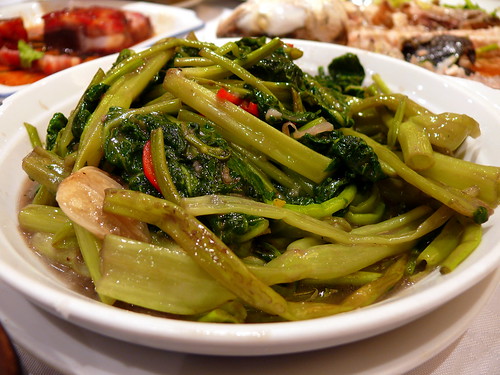
Fried kangkong in fermented beancurd sauce.

I wanted blanched kangkong with fermented beancurd, a dish that's always found in small wonton noodles restaurants. This version is fried. It's yum but I still prefer the blanched version. HK kangkong is very young and tender.

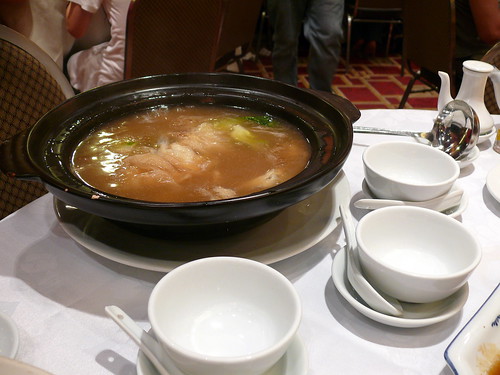
The ultimate dish came towards the end; I wanted a winter melon soup, cooked and served in the melon (doong gwa jung) but they didn't have it (usually available in colder weather). I didn't know that A had ordered another soup in place of it, and it was not an ordinary soup she had ordered.

P1250907

P1250914
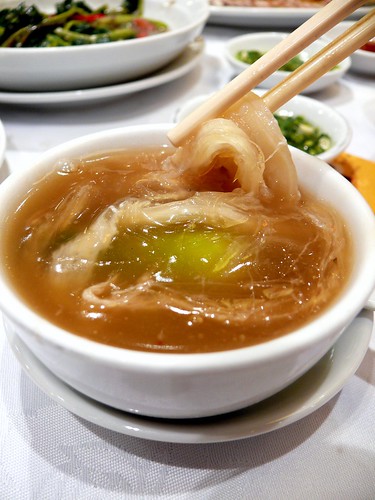
Pai chee (whole fins), eaten with a drizzle of quality black/red vinegar.

Sharks' fins soup, not the ordinary sharks' fins, but the mother of them all, the pai chee or "row of fins"! I haven't had this for decades! Out with my animal rights thinking; I'm carnivorous anyway. A kid at the next table was saying "Wah, pai chee..." in wonderment. He obviously knew good stuff when he saw it.

Nearly all the sharks' fins in soups these days are imitation gelatine fins (those individual strands) but pai chee can't be imitated so you know this is the real thing.

P1250919

So much fins it's like eating noodles! The soup was light and just nice, not too salty or too xien/savory-sweet. None of us spoke as we ate. It was like a sacred moment. And you know, it was considered cheap: HK$500/RM230/US$70 (still, that one soup costed twice as much as all the 5 dishes above!) and we had two bowls each, with leftover soup sans fins. There's just no way you can eat that anywhere else.

P1250901
TWW's dishes are very home-cooked, the flavor just nice and not overdone. I really love eating here. I want to meet Toto and tell him so one day. I also want some cooking tips, Toto.

One of the reasons why I came back to TWW was that last year, I didn't try one of their top items, jee yau fan or pork oil rice. I just thought it'd be so weird and unhealthy. But since then I've read the raves about TWW's famous delicious pork oil rice on other blogs, and all the HK friends and relatives whom I asked on this trip all give two thumbs up for this item. I will have to break here and keep you on the edge of your keyboards until my next post when I present TWW's pork oil rice and a dessert that is so good, every table had one. We even gave up the 2 free desserts--red bean soup and something else--for this heavenly item because we were so full we had room for only one more mouthful of food.

Address:

Tai Wing Wah Village Cuisine
Shop No 2, 1/F
Chevalier Comm Ctr
8 Wang Hoi Rd
Kowloon Bay, HK

Tel: 2148 7773 (reservations); fax: 2148 6559

Book before you leave for HK!

p.s. A & H didn't know about this blog (I just sent them my link yesterday--hope they have the time to check it); this is how they eat--hedonistically. Once a year I visit them and drown in my sig fook, eating fortune.

Friday, September 19, 2008

Hong Kong Day 3

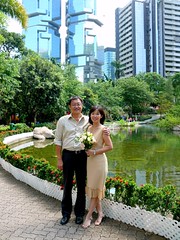
Today (28/8/08) we went to Cotton Tree Drive to witness a wedding registration. Unfortunately the cotton trees were not in bloom. It turned out that the garden next to the wedding registrar office, surrounded by concrete and glass towers, was designed by C, Hub's classmate from KK. Cotton Tree Drive is the best wedding registry in HK, the others being offices with no gardens .However, the registrar office was so...old-fashioned and cheesy. It reminded me of those funeral parlors in the US. We decided to take a photo, and here's how old weds look like:

P1250592a

From there it was a 2 minute walk to Pacific Place (PP). While food is affordable in HK, branded clothes are expensive, unless you shop in Mongkok. If you go to PP, don't miss The Great Food Place in the basement. It is simply awesome, with the best imported foodstuff from all over the world: eggs from Denmark, all kinds of exotic fruits and veg that are so fresh it's unbelievable that they were flown in from other corners of the world, Godiva and Valrhona chocolate counters, and most impressive of all, a tiny corner where you can sit on bar stools and taste their Iberico ham, the world's best and most expensive ham. I was milling around the counter, very tempted to sit down for a taste of the famous ham that is made from a special breed of black pig. The cheapest item was about HK$68/RM31/US$9 but that seemed to be a selection of salami and such made from Iberico scraps. For the real thing, sliced straight off the bone in front of you, the price was about HK$280/RM127/US$38, including a glass of wine but the portion must be very small considering that this ham costs more than HK$20,000/kg, if I'm not wrong. I knew Hub would grumble so I reluctantly walked away. It's better to shop alone . For a no-pain taste of this ham, you can try City Super, an upscale supermarket, which sometimes offer free sampling of Iberico ham. My girl and I had a feast of Iberico ham in City Super one year. We ate and ate, unashamedly thick-skinned were we. I don't know, I just prefer Spanish ham to Italian ever since a Spanish food and wine dinner in TABH long time ago. Spanish ham seem smoother, tastier and less salty.

P1250648
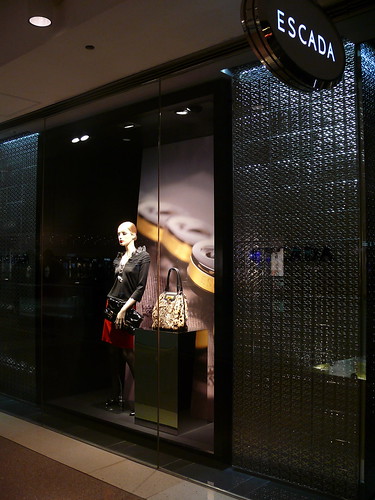
I didn't get to Fa Yuen Ga ('Flower St') this year but this window display gladdened my heart. All the flowers are real, the brown ones are dried.

P1250663
I thought this photo turned out pretty good.

P1250666
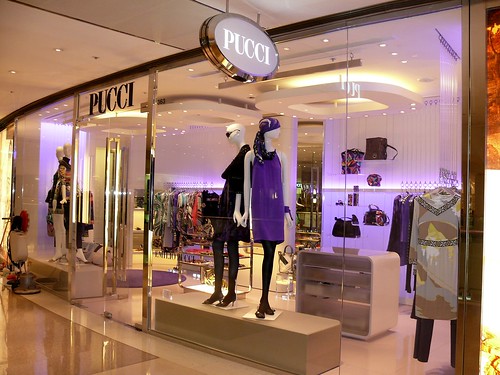
Now if I won a lottery, I'd want a Pucci dress. But then I'd be too old so I'll give it to my daughter.

I was craving for wagyu steak, but the queue at Toka, a new Jap restaurant on the basement floor of PP, was very long. Btw, if you want to eat classy dim sum, try Zen on the same floor. Items start from HK$40/RM18/US$5.50 per steamer basket. A & H took me there once, when the place was done up in black, and it was truly good. Again I didn't have to pay and if I had to, I wouldn't eat there even though the dim sum was excellent. Just too over-priced.

So we made the awful decision of going to Taikooshing Cityplaza by subway for Japanese wagyu. There were only 2 Jap restaurants there, one a sushi bar and the other, a regular Jap restaurant but it didn't serve wagyu. I was like a spoilt child, bent for wagyu. Hub was a dear, very understanding. We even walked to Taikoo Place, that new office complex of several buildings where 6th Aunt had her fall but there were no Jap restaurants there except for one old joint in between the office and the mall. In the end, we ended up at West Villa Restaurant in Taikooshing Cityplaza which someone had recommended to me for their roasted pork.

P1250622

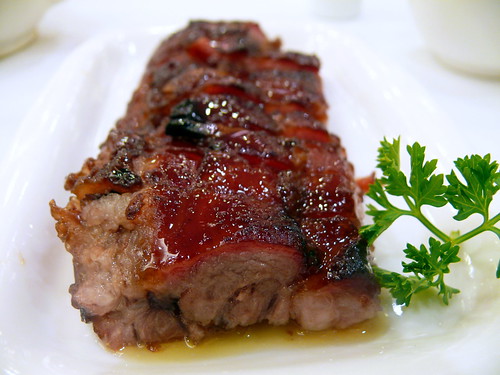
This is West Villa's famous roasted pork, which is half lean and half fat resulting in moist and tender yummy meat that goes well with rice.

collage

We tried two of their dim sum (good) and I was still searching for ultimate the cheong fun and gon chow ngoe ho. I was disappointed. The cheong fun was okay but the ngoe ho was greasy and not tasty.

My friend H, when I told her about this restaurant, said that this is a great restaurant for a la carte dishes. So, do keep this in mind.

P1250640

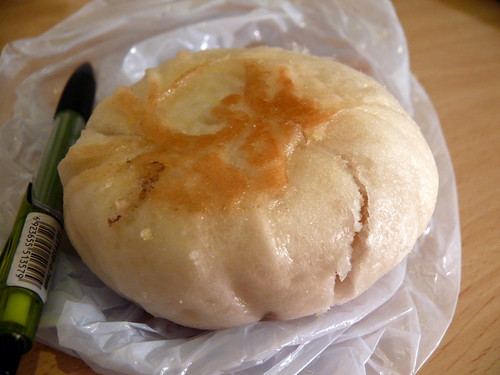
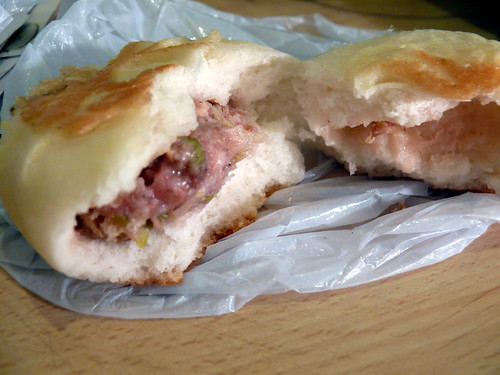
This is a seng jen bao (fried bun, sold at every corner in Shanghai) from a small stall near our hotel. It was delicious, and this bao is 2 to 3 times the size of seng jen baos in Shanghai. I think I am beginning to prefer sengjenbaos to xiao long baos.

P1250639

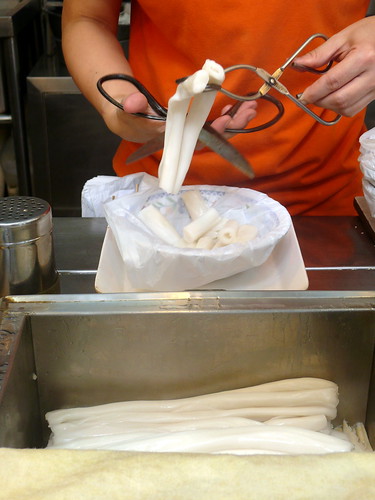
Finally, I found the cheong fun I was looking for! This is the same stall behind Ibis Hotel where I bought that skewer of mixed cow insides:

P1260017

P1260016
This is a much more hygenic way to handle cheong fun. Why can't people do that in Malaysia and Singapore?

P1260018
Plain steamed cheong fun with sweet sauce, chili sauce, sesame sauce and sesame seeds.

The lady had added too much tahini. More sweet sauce would be better. This is still not as good as those on Fa Yuen Gai, but I was happy. The only nagging knot in my heart was that I knew I wouldn't be able to have my wagyu steak and a Vietnamese meal on this trip because there was only 2 more days to go and all meals for those days were already fixed.
Related Posts Plugin for WordPress, Blogger...